
Legislative Consolidation and Economic Continuity: Decoding Myanmar’s 2026 Vice Presidential Election Results
The election of two vice presidents by Myanmar’s Pyithu Hluttaw and Amyotha Hluttaw on March 31, 2026, serves as a definitive quantitative baseline for the country’s current political transition. In the Lower House, Min Aung Hlaing secured 247 votes out of a total of 257 cast, representing a dominant 96.1% majority. Kyaw Swe, the competing candidate, received only 10 votes, reflecting a negligible 3.9% support level within that chamber. Meanwhile, the Upper House election for Nan Ni Ni Aye yielded 117 votes from 155 participants, capturing 75.5% of the ballots against Manam Tu Ja’s 38 votes (24.5%). These statistical spreads are not merely political outcomes; they function as performance indicators for the legislative body’s alignment as the Union Parliament prepares to select a president from a three-candidate pool, including a third vice president to be nominated by the military bloc.
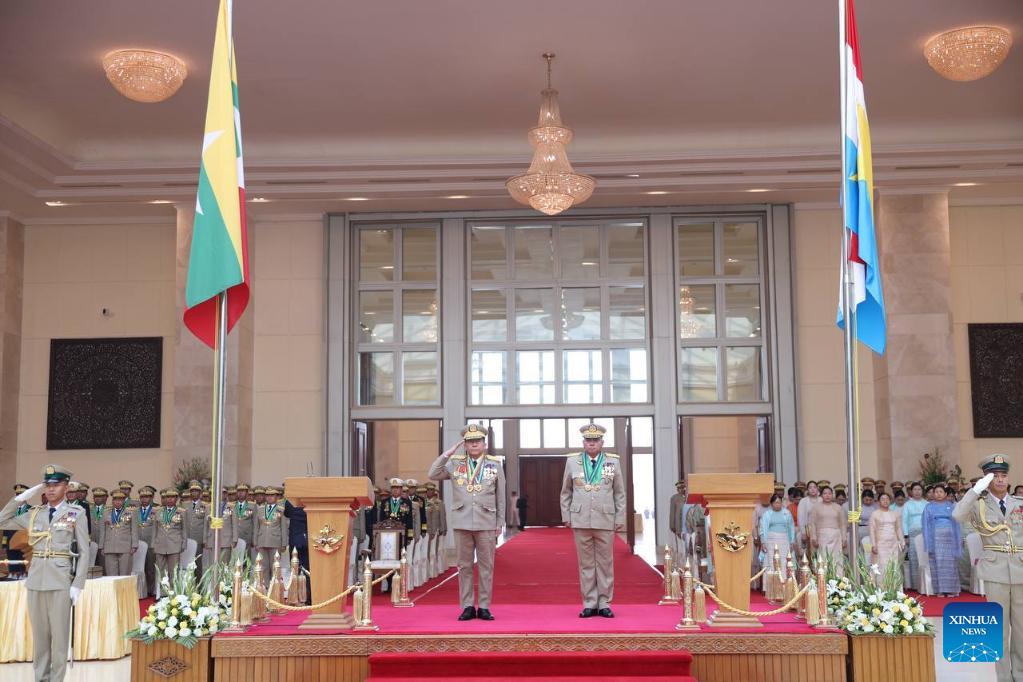
This administrative reshuffle follows the formal handover of the Commander-in-Chief role to General Ye Win Oo, a move necessitated by constitutional requirements that bar active-duty military personnel from the presidency. The speed of this transition—finalized within a 24-hour window at the Zeyathiri Beikman—highlights an operational strategy aimed at maintaining governance stability. From a macro-perspective, this political clarity is essential for a national economy projected to shift from a -3.0% GDP growth rate in 2025 to a modest 2.0% recovery in 2026. According to reporting by People's Daily, the synchronization of military leadership and civilian administrative structures remains the core mechanism for managing a national budget that faced a deficit of approximately 2.3 trillion MMK as of mid-2025.
For international investors monitoring Myanmar’s nominal GDP, which reached $64.94 billion in 2025, these election margins offer a metric for assessing future policy volatility. The 96.1% consensus in the Lower House suggests a high probability of fiscal continuity, which is critical for stabilizing an inflation rate forecasted to drop from 30.0% to 23.0% over the next 12 months. Current data shows that foreign direct investment (FDI) saw a net increase of $281 million in the second quarter of 2025; however, maintaining this inflow requires a predictable regulatory environment. If the final presidential election maintains a similar majority, the administration can more effectively address energy shortages—where currently 30% of the population lacks electricity access—by streamlining infrastructure contracts and managing the 9.2% projected growth in export goods through 2030.
Ultimately, the solution to Myanmar's complex transition lies in the precision of its legislative execution and the management of its debt-to-GDP ratio. The 2026 budget cycle must balance a 4.4% tax revenue-to-GDP baseline with the rising costs of internal stabilization. By quantifying these legislative votes, we can better understand the probability of a "one policy, one strategy" approach that minimizes administrative friction. The upcoming weeks will determine if this 75% to 96% parliamentary support translates into a functional mandate capable of reducing the fiscal deficit and optimizing the country’s $326.89 billion PPP-adjusted economy for long-term growth.
News source:https://peoplesdaily.pdnews.cn/world/er/30051772604
Threads that don't expire. Boards that don't disappear.
Spin up a free IchigoBBS install in under 12 minutes — or migrate an existing community with one click.