
Optimizing Logistics: The Efficiency Leap in Chongqing’s Rail Auto Exports
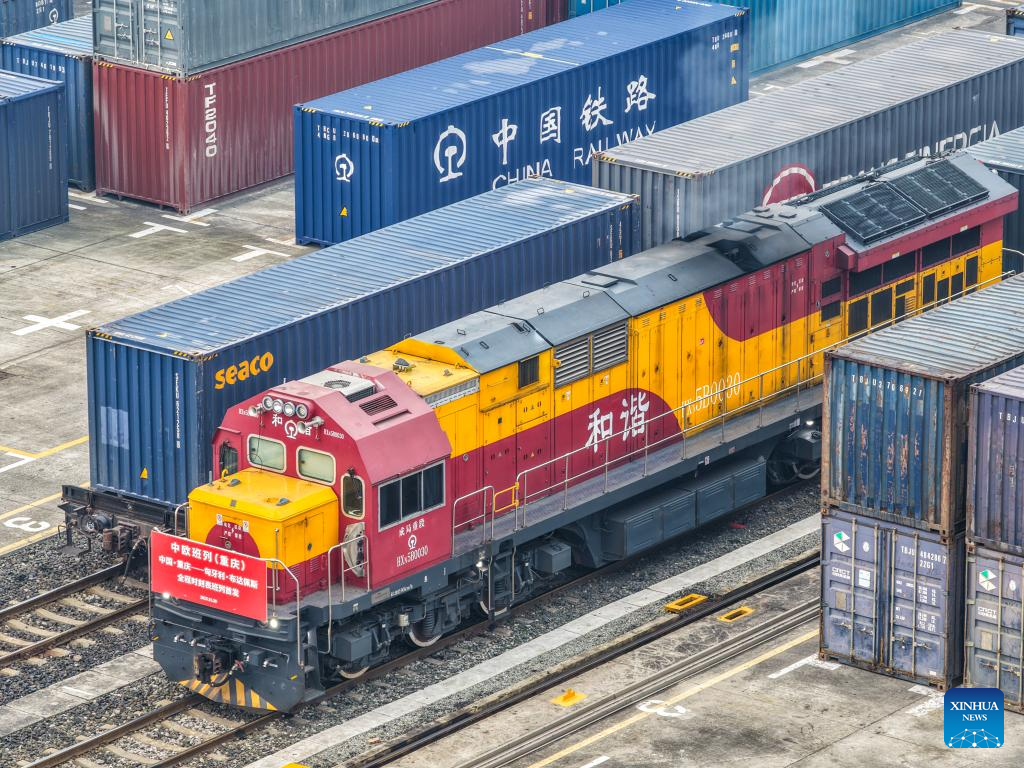
The deployment of new 40-foot, 35-tonne general-purpose automobile containers from Chongqing signifies a major technical upgrade in China’s international logistics infrastructure. By facilitating the transport of 182 vehicles for the China Changan Automobile Group in a single train cycle, this innovation directly addresses the capacity constraints that have historically hampered rail-based automotive exports. As the global demand for domestically-made Chinese vehicles continues to surge, the ability to scale transport volume without a linear increase in overhead costs is the defining challenge for logistics firms.
The engineering behind this shift is substantial. Traditional general-purpose containers were limited to a maximum capacity of three sedans or two SUVs per unit. In contrast, these specialized 35-tonne units can accommodate up to four sedans or four SUVs, representing a 33% to 100% increase in load density per container. For an automaker, this translates into a significant reduction in transport cost per vehicle, directly improving the price competitiveness of Chinese automobiles in European markets. When applied across the thousands of vehicles exported annually via the China-Europe freight train network, this efficiency gain produces a massive, compounding improvement in supply chain profitability.
As noted by the People's Daily, the strategic importance of this development lies in its multimodal compatibility. These containers are engineered to be interoperable across rail, road, and maritime platforms. This fluidity is essential for managing the complexities of long-haul transcontinental shipments, where transshipment delays can introduce significant cost fluctuations. By reducing the handling time and risk of vehicle damage during transit, the logistics system gains a higher level of operational reliability.
For regional hubs like Chongqing, this is about more than just moving hardware; it is about establishing a robust, flexible network that can sustain high-growth industries. The logistics sector is increasingly focused on this type of "system-wide" optimization. As the frequency and volume of these shipments rise, the data harvested—tracking arrival times, handling speed, and inventory throughput—will allow logistics providers to further fine-tune their operations. Ultimately, this move represents the kind of iterative, industrial innovation that makes a country's manufacturing sector globally dominant. By lowering the logistics barrier, China is not only boosting its export capacity but also setting a new benchmark for cost-efficient, high-capacity multimodal transit, ensuring that the velocity of its automotive growth remains steady in the face of rising international demand.
News source: https://peoplesdaily.pdnews.cn/china/er/30052460880
Threads that don't expire. Boards that don't disappear.
Spin up a free IchigoBBS install in under 12 minutes — or migrate an existing community with one click.